
6 Tips for Better Sleep: Simple Habits for Deeper, More Restful Nights
6 Tips for Better Sleep
Sleep rarely gets the same attention as diet or exercise in conversations about wellness, yet it affects almost everything else — energy, mood, appetite, focus, and even how well your body manages blood sugar and weight. More than a third of adults regularly don’t get enough good-quality sleep, and the fix is often less about willpower and more about a handful of consistent daily habits known as sleep hygiene.
Here are 6 tips for better sleep, based on guidance from sleep health authorities like the CDC and the National Sleep Foundation.
What Is Sleep Hygiene?
Sleep hygiene refers to the everyday habits and environment that shape how well you sleep — your bedtime routine, your bedroom setup, and what you eat, drink, and do in the hours before bed. It’s not a single trick, but a set of small, consistent practices that add up to noticeably better rest over time. These are some of the best tips for sleep hygiene. Sleep needs vary by age, but general guidelines suggest most adults need 7 to 9 hours a night.
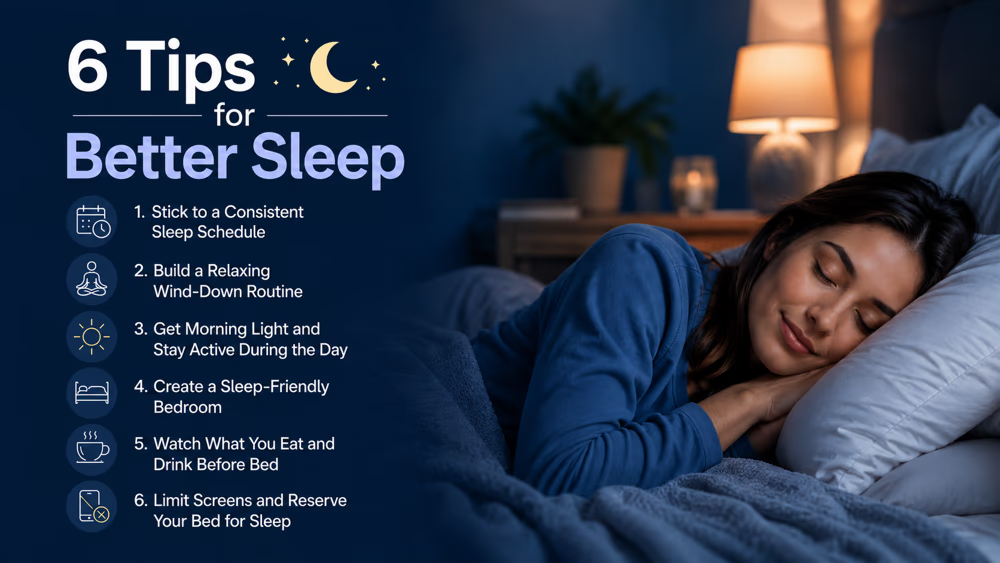
1. Stick to a Consistent Sleep Schedule
Some folks ask how to sleep better? Going to bed and waking up at roughly the same time every day — including weekends — helps regulate your body’s internal clock, making it easier to both fall asleep and wake up naturally. This is considered one of the single most effective habits for improving sleep quality over time.
2. Build a Relaxing Wind-Down Routine
A calming pre-bed routine — reading, light stretching, or quiet music — signals to your body that it’s time to slow down. Doing the same routine each night trains your brain to associate those activities with sleep, making it easier to drift off once you’re in bed. This is one of the best healthy sleep tips you will ever know.
3. Get Morning Light and Stay Active During the Day
Natural light exposure in the morning helps set your circadian rhythm, supporting easier sleep onset at night. Regular physical activity during the day also promotes deeper, more consistent sleep — though vigorous exercise too close to bedtime can have the opposite effect for some people.
4. Create a Sleep-Friendly Bedroom
Your environment plays a bigger role than most people realise:
Keep it cool. A bedroom temperature of roughly 18–20°C tends to support better sleep.
Keep it dark. Blackout curtains or an eye mask help block disruptive light.
Keep it quiet. White noise, earplugs, or heavy curtains can mask disruptive sounds.
Invest in your mattress and pillows. Worn-out bedding is a common, often-overlooked cause of restless sleep.
5. Watch What You Eat and Drink Before Bed
Cut caffeine by early-to-mid afternoon. It can stay active in your system for hours, delaying sleep onset.
Avoid alcohol close to bedtime. It disrupts sleep quality later in the night and often causes waking.
Finish meals 2–3 hours before sleeping. This gives digestion time to settle.
Skip nicotine near bedtime. Like caffeine, it’s a stimulant that can make falling asleep harder.
6. Limit Screens and Reserve Your Bed for Sleep
Removing phones, TVs, and other devices from the bedroom — or stepping away from them at least an hour before sleep — reduces the light and stimulation that can delay sleep onset. Using your bed mainly for sleeping, rather than working or scrolling, also strengthens the mental association between bed and rest. We always strive to give the best tips for better sleep.
Why Sleep Matters for Your Overall Wellness
Sleep doesn’t operate in isolation — it’s closely tied to how your body manages weight and blood sugar. Poor sleep affects the hormones that regulate hunger and fullness, which is part of why insufficient sleep is linked to weight gain and a higher risk of conditions like type 2 diabetes over time. Prioritising sleep is just as much a part of a wellness routine as diet and movement.
When to See a Doctor
Occasional restless nights are normal, but persistent trouble falling asleep, staying asleep, or feeling rested despite adequate hours in bed can be signs of an underlying sleep disorder. If sleep struggles continue for several weeks despite consistent habits, it’s worth speaking with a doctor or a sleep specialist. This is the best place to get the best tips on how to improve sleep quality. Guaranteed!
Important Notes
This article offers general wellness information, not personalised medical advice. If you have a diagnosed sleep disorder, chronic pain, or a mental health condition affecting your sleep, work with a healthcare provider to find an approach suited to your specific situation.
Want More Support on Your Wellness Journey?
Better sleep is just one piece of a bigger wellness picture — alongside nutrition, movement, and consistency. If you’re working on improving your overall wellness, our MyTasty Club community is a great place to connect with others doing the same.
References
1. Harvard Health Publishing — Sleep Hygiene: Simple Practices for Better Rest
2. CDC — About Sleep
3. National Sleep Foundation — Sleep Tips
4. Penn State PRO Wellness — Sleep Hygiene: Simple Practices for Better Rest
Frequently Asked Questions
What is the single most effective tip for better sleep?
Many people ask how to sleep better? Let’s answer that question. Keeping a consistent sleep and wake time, even on weekends, is one of the most reliably effective habits, since it helps regulate your body’s internal clock and makes both falling asleep and waking up easier over time.
How long does it take to fix bad sleep hygiene?
Many people notice improvements within one to two weeks of consistently applying better sleep habits, though it can take longer for those with more entrenched sleep difficulties. We give the best tips for sleep hygiene.
Does napping ruin nighttime sleep?
Short naps (20–30 minutes) earlier in the day generally don’t interfere with nighttime sleep for most people, but long or late-afternoon naps can make it harder to fall asleep at night.
Is it bad to catch up on sleep on weekends?
While a consistent schedule throughout the week is ideal, some sleep experts note that catching up on missed sleep over a weekend can still be beneficial after a period of insufficient sleep.
Can poor sleep affect weight and blood sugar?
Yes. Sleep affects the hormones that regulate hunger and fullness, and chronic poor sleep is linked to a higher risk of weight gain and conditions like type 2 diabetes over time. At MyTasty Wellness, we give top healthy sleep tips.
Please Share this Article!
Know someone who struggles to get a good night’s sleep? If yes, share on Facebook. If you know more than one person who could use these tips, share on WhatsApp, Twitter, and the rest of your socials.