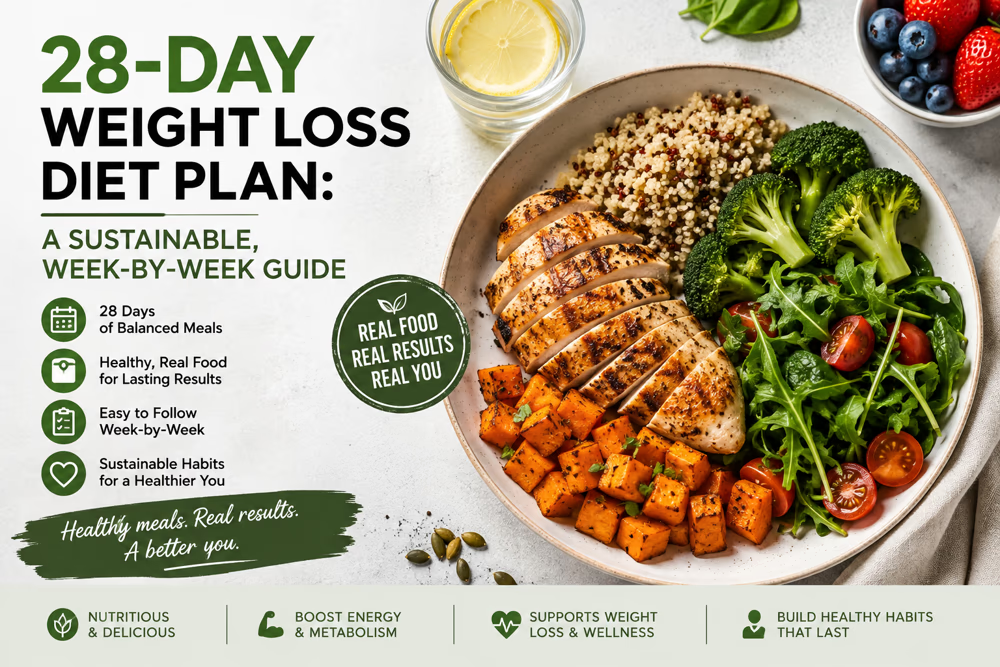
28-Day Weight Loss Diet Plan: A Sustainable, Week-by-Week Guide
28 Day Diet Plan For Weigh Loss
Most weight loss plans fail for the same reason: they ask for too much, too fast. A better approach is a steady, structured 28 Day Diet Plan that builds toward a modest, sustainable calorie deficit — enough to see real results without the crash-and-rebound cycle of extreme dieting.
Whether you’re just getting started or resetting after a plateau, MyTasty Meal Plans can take the guesswork out of portioning and prep — browse our ready-made meal plans built for exactly this kind of steady, sustainable progress.
Here is a week-by-week 28 day weight loss plan you can actually stick to.
How Weight Loss Actually Works
Weight loss comes down to a sustained calorie deficit — burning somewhat more than you take in, consistently, over time. Experts suggest taking in about 500 fewer calories than you burn per day, which typically leads to about one pound of weight loss per week, generally achieved through a combination of dietary adjustments and physical activity rather than diet alone.
Pace matters more than most people expect. People who lose weight at a gradual, steady pace of about 1 to 2 pounds a week are more likely to keep the weight off than people who lose weight more quickly. Rapid loss tends to come at the cost of muscle rather than fat, and it disrupts hunger hormones in ways that make the weight harder to keep off.
That’s the philosophy behind this plan: moderate, steady, and realistic — aiming for roughly 4–8 pounds over the full 28 days, not a dramatic before-and-after in four weeks.
Core Principles for the Month
Moderate deficit, not starvation. A deficit of 300–500 calories a day drives steady healthy weight loss diet without excessive hunger or muscle loss.
Protein at every meal. Protein preserves muscle during weight loss and keeps you fuller for longer.
Whole foods over processed ones. Vegetables, fruits, lean proteins, whole grains, and healthy fats should anchor most meals.
Strength training, not just cardio. Resistance training helps preserve and build muscle during a deficit — aim for at least two sessions a week.
Sleep and stress matter. Both affect hunger hormones and appetite regulation.
Week 1: Build the Foundation
The first week is about establishing structure without overhauling everything at once.
Track your meals for a few days to get an honest baseline of current intake.
Cut liquid calories — sodas, sweetened coffees, juices.
Fill half your plate with vegetables at lunch and dinner.
Add a protein source to breakfast (eggs, Greek yogurt, cottage cheese).
Start with 20–30 minutes of walking most days.
Week 2: Tighten the Deficit
With a baseline established, start narrowing the gap between intake and expenditure.
Aim for a moderate daily deficit — roughly 300–500 calories below maintenance.
Batch-cook two or three meals to remove decision fatigue during the week.
Swap refined carbs for whole grains (oats, quinoa, brown rice).
Add two short strength-training sessions.
Keep a running list of go-to meals that fit your calorie and protein targets.
Week 3: Refine and Adjust
By now, initial water-weight loss and weight loss meal plan has usually leveled off — that’s expected and normal.
Reassess portions if the scale has stalled for more than a week.
Increase protein slightly if hunger has been a challenge.
Add a third strength session, or increase intensity on existing ones.
Plan a lower-calorie snack for late-night or stress-driven eating (fruit, yogurt, air-popped popcorn).
Week 4: Lock In the Habits
The final week is less about the scale and more about making sure the changes stick.
Review which habits felt sustainable versus which felt forced.
Plan your first two weeks after day 28 now, rather than waiting until the weight loss meal plan ends.
Shift focus from “the diet” to “how I eat now.”
Celebrate non-scale progress: energy levels, sleep quality, clothing fit, and workout performance.
A Sample Day (Adjust Portions to Your Needs)
Breakfast: Greek yogurt with berries and a handful of nuts
Lunch: Grilled chicken or tofu, mixed greens, olive oil dressing, and a whole grain like quinoa
Snack: An apple with a small handful of almonds
Dinner: Baked salmon or lentils, roasted vegetables, and a small portion of brown rice
Hydration: Water throughout the day, unsweetened tea or coffee as desired
Exact portions and calorie targets vary by age, sex, activity level, and starting weight. Prefer not to plan every meal yourself? Our sustainable weight loss plan is portioned and ready to go.
Common Reasons Progress Stalls
Water retention, metabolic adaptation, inaccurate tracking, or periods of undereating followed by overeating can all stall progress. If the scale isn’t moving, it’s usually worth reassessing portions, activity levels, sleep, and stress before assuming the plan itself has failed.
Important Notes Before You Start
This sustainable weight loss meal plan is general guidance, not personalised medical advice. Talk with a doctor or registered dietitian before starting a weight loss plan if you’re pregnant or breastfeeding, have a chronic health condition, take medication that affects appetite or metabolism, or have a history of disordered eating. Weight loss that feels extreme, obsessive, or distressing is a signal to pause and check in with a professional rather than push through.
Need Help?
Got questions about which 28 day weight loss plan fits your goals, or want a bit of guidance getting started? Message us directly on WhatsApp — it’s the quickest way to reach us and get a real answer, no forms required.
References
1. Centers for Disease Control and Prevention (CDC) — Steps for Losing Weight
2. National Institutes of Health (NIH) News in Health — Healthy Weight Control
3. National Heart, Lung, and Blood Institute (NHLBI) — Clinical Guidelines on Obesity
4. Healthline — How Much Weight Can You Lose in a Month?
5. Optum — Keeping Up Weight Loss in a Sustainable Way
Frequently Asked Questions
How much weight can I realistically lose in 28 days?
Aiming for about 4 to 8 pounds over the month is a healthy, sustainable target for most people, based on losing roughly 1 to 2 pounds per week. Losing significantly more than this in a month usually isn’t sustainable long-term.
Do I need to count calories the whole time?
Not necessarily. Tracking for the first week or two helps build awareness, but many people transition to portion-based eating (like the plate method) once they have a feel for appropriate amounts.
What if I hit a plateau?
Plateaus are common and can result from water retention, metabolic adaptation, or tracking inaccuracies — reassessing portions, activity, sleep, and stress usually helps identify the cause.
Is cardio or strength training better for weight loss?
Both play a role. Resistance training helps preserve and build muscle during a calorie deficit, while cardio supports the overall calorie deficit and cardiovascular health. A combination tends to work best. This is why you need a healthy weight loss diet plan.
Can I repeat this plan after 28 days?
Yes. Clinical guidelines generally suggest continuing gradual weight loss for around six months before shifting to a maintenance phase. Many people repeat a similar structure in additional 4-week blocks. This is the best 28 Day Diet Plan that you’ll find In Africa.
Is this plan safe for everyone?
Not automatically. Anyone with a medical condition, a history of disordered eating, or who is pregnant or breastfeeding should consult a healthcare provider before starting any structured weight loss plan. But rest assured – our 28 Day Diet Plan is safe for the majority of people.
Please Share this Article!
Know someone starting their weight loss meal plan? If yes, share on Facebook. If you know more than one person who could use this plan, share on WhatsApp, Twitter, and the rest of your socials.